
Welcome back to Smart AI for Work (www.smartaiforwork.com). As we cross the threshold of the first quarter of 2026, the artificial intelligence landscape has shifted from “experimental” to “essential.”
If 2024 was the year of the chatbot and 2025 was the year of multimodal integration, the first three months of 2026 are defined by one word: Agency. We are no longer just talking to AI; we are delegating entire workflows to it.
In this report, we identify the key players and tools setting the trends for the start of 2026. If you want to optimize your professional output this year, these are the names that should be in your digital toolkit.
The Big Shift: From “Assistants” to “Partners”
The most significant trend of Q1 2026 is the transition of AI for work from a passive responder to an active collaborator. Microsoft’s Chief Product Officer for AI, Aparna Chennapragada, recently noted that 2026 marks an era where AI doesn’t just answer questions—it joins the team.
Top Trendsetters: The “Agentic” Revolution
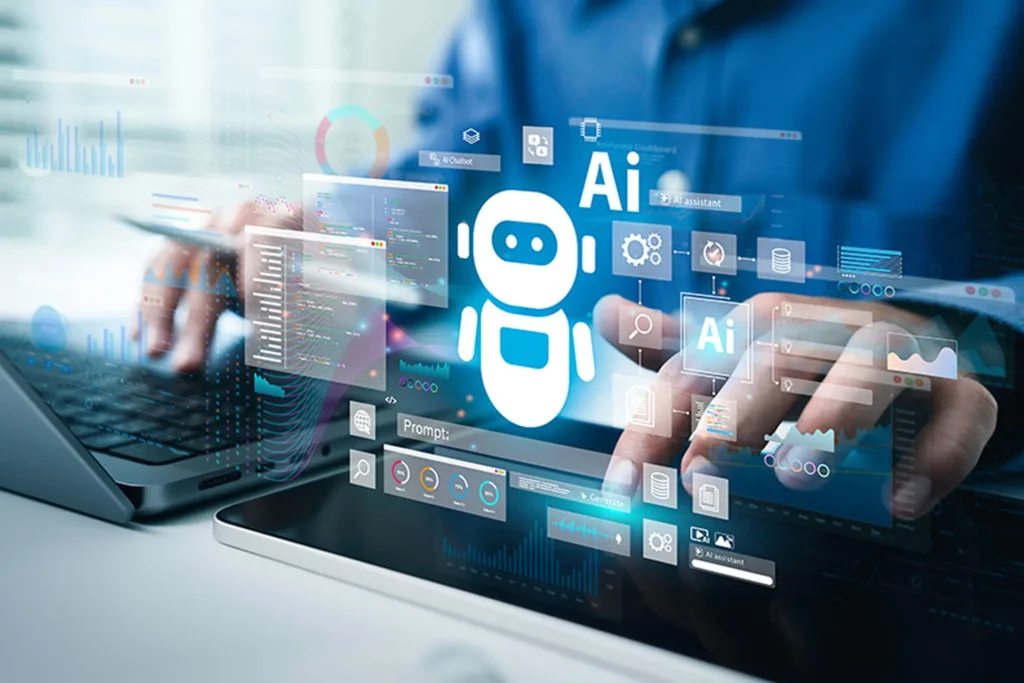
The tools winning the first quarter of the year are those that can “act” rather than just “speak.” These are known as AI Agents.
-
Manus & OpenClaw: These are the breakout stars of early 2026. Unlike standard LLMs, these agents can navigate your browser, manage your file system, and execute complex multi-step tasks (like planning a business trip or conducting deep market research) with minimal oversight.
-
Microsoft Gemini 3 & Azure Agent Builder: Google and Microsoft are in a tight race. Google’s Gemini 3 family has unified reasoning and multimodal properties, making it a powerhouse for enterprise search and autonomous assistants.
-
Anthropic (Claude Code): Anthropic has solidified its position in Q1 as the leader for technical professionals. Claude Code is currently the gold standard for “intent-driven” development, allowing developers to describe a feature and let the AI build, test, and maintain the code.
Top AI Tools for Work: Q1 2026 Rankings
Based on user adoption and performance metrics from the start of the year, here are the tools currently dominating the professional landscape.
1. The Productivity Powerhouses
| Tool | Category | Why It’s Trending in Q1 2026 |
| Superhuman AI | It has moved beyond templates to “inbox prioritization” that matches your voice perfectly. | |
| ClickUp AI | Project Management | It now features “AI-powered scheduling” that automatically adjusts deadlines based on team bandwidth. |
| Wisprflow.ai | Writing/Dictation | The premier voice-to-text tool that understands context and nuance, not just words. |
2. Specialized Research & Knowledge Management
-
NotebookLM: An underrated powerhouse that has become a staple for researchers. It allows you to ground AI responses entirely in your own uploaded documents, eliminating hallucinations.
-
Perplexity (Comet Browser): Perplexity’s new Comet browser is redefining how we search. It doesn’t just give you links; it browses the web for you to complete “click work” like form filling or comparison shopping.
-
Glean: For those working in large organizations, Glean has become the “internal Google,” connecting all company data into one searchable, AI-driven interface.
3. Visuals & Media Creation
-
Nano Banana 2 (Gemini): Google’s latest image model has dominated the early 2026 market due to its incredible consistency. Professionals are using it for brand-accurate marketing materials and UI mockups.
-
Higgsfield: This is the current leader for “cinematic” AI video. It allows creators to describe camera angles and lens types, turning text-to-video into a professional production studio.
-
Kimi Slides: For those who live in PowerPoint, Kimi Slides is the Q1 winner for turning dense data into “business analyst” style decks in seconds.
Why These Trends Matter for Your Business
The reason these specific tools are setting trends isn’t just because they are “cool.” It’s because they provide a measurable Return on Investment (ROI).
-
Reduced “Tool Fatigue”: In early 2026, we see a move toward “all-in-one” assistants like Monica AI, which combines GPT, Claude, and Gemini into one interface. Users are tired of 50 different subscriptions.
-
Edge Intelligence: Machine learning is moving to the “edge.” This means tools are running more efficiently on local devices, which improves data privacy—a top concern for 2026 enterprise adoption.
-
Intent-Based Work: We are moving away from manual “click-and-drag” tasks. The trend is to “express intent” and let the AI handle the execution.
Under the Radar: The “Hidden Gems” of 2026
While the big names dominate the headlines, a few specialized tools are quietly gaining massive traction among power users:
-
Workbeaver AI: A desktop automation tool that literally controls your computer to handle repetitive spreadsheets and file organization.
-
Autocalls.ai: A game-changer for small businesses, providing an AI receptionist that handles inbound calls and WhatsApp integration 24/7.
-
Replit Agent: For entrepreneurs, Replit’s agent is allowing non-technical founders to “vibe code” full applications from scratch using only natural language.
Summary: How to Stay Ahead
The first three months of 2026 have made one thing clear: The winners aren’t those who use the most AI, but those who use it most strategically.
To stay competitive, we recommend:
-
Audit your “Busy Work”: Use a tool like Workbeaver or n8n to automate your most repetitive daily tasks.
-
Switch to Agentic Search: Stop scrolling through pages of links. Use Perplexity or Scouts (UTOI) to filter the noise.
-
Focus on Customization: Don’t just use “standard” ChatGPT. Look into tools like Dust or Notion AI that allow you to build internal agents based on your specific company data.
At Smart AI for Work, we will continue to track these trendsetters throughout the year. The “Year of Truth for AI” is finally here—it’s time to put these tools to work.
FAQ: AI for Work in 2026
Which AI model is best for coding in 2026? While ChatGPT remains popular, Claude Code and Cursor are currently the top-rated tools for professional developers due to their superior reasoning and project-wide context.
Is it safe to use AI with sensitive company data? Tools like Glean and Azure AI Foundry are specifically designed for enterprise security. In 2026, “Data Sovereignty” has become a core feature for major AI providers.
Are AI Agents better than standard chatbots? Yes, for productivity. A chatbot can tell you how to do a task; an AI Agent (like Manus) can actually go and do the task for you.
Want to dive deeper into any of these tools? Check out our [Full Review Section] or sign up for our newsletter to get weekly workflow templates delivered to your inbox.